

Cyclosporiasis cases climb as search for answers continues
Reported cases of cyclosporiasis in the U.S. continue to climb as the search for the source continues.





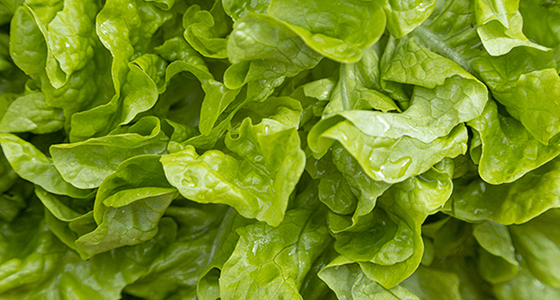
Reported cases of cyclosporiasis in the U.S. continue to climb as a search for the source of the outbreak continues.
According to the Michigan Department of Health and Human Services (MDHHS), 7,171 cases of the parasite that infects the intestines and causes watery diarrhea, nausea, and stomach cramps have been reported as of July 22. That’s up from 2,640 cases reported as of July 13.
As of July 20, the Centers for Disease Control (CDC) had received reports of 4,173 confirmed domestic cases of cyclosporiasis and is aware of 7,400 cases — many in Michigan and Ohio — reported by state and local health departments that are not yet laboratory-confirmed and require further investigation and analysis.
CDC has received reports from 41 states, with 308 hospitalizations and no deaths reported. Sick people ranged in age from 2 to 95 years, with a median age of 44, and 56% were female.
Michigan health officials say testing shows lettuce or salad greens as a potential source of the outbreak, though other food items have not been ruled out as a source. A specific grower or supplier has not been identified in the nationwide outbreak.
After reports originally linking the parasite to produce supplier Taylor Farms, the U.S. Food and Drug Administration later said that a tested lettuce sample produced a false positive. But the organization still recommends not eating iceberg lettuce grown or processed by Taylor Farms in Mexico.
Taylor Farms, which voluntarily recalled iceberg lettuce sourced from central Mexico distributed in 27 states, has been connected to previous outbreaks, including E. coli linked to onions provided to McDonald’s restaurants in 2024.
In a July 19 statement, Taylor Farms said: “Yesterday, FDA informed Taylor Fresh Foods that one of its iceberg lettuce products from central Mexico tested positive for cyclospora. Today, we were informed that FDA made a mistake, and this was a false positive. To be clear, at this moment, FDA has not identified a single positive product test result for cyclospora.”
The FDA is continuing to test lettuce samples.
“Although we do not have a definite product identified as the source of the outbreak, we want to let Michiganders know what we have learned so far so they can take steps to protect their families,” Dr. Natasha Bagdasarian, MDHHS chief medical executive, said in a statement on the department’s website. “Early information has shown lettuce as a common product that regularly comes up during the investigation. We will continue to provide updates as we learn more.”
The CDC said the cyclosporiasis season is considered May 1 through Aug. 31, though clusters of cases have been detected outside that range in some years.

“This is on track to be the largest cyclospora outbreak in U.S. history,” Max Teplitski, International Fresh Produce Association chief science officer, said in a statement. ” … Our central concern is this: The response we are seeing will likely not slow this outbreak down or stop people from getting sick, nor is it intended to identify the root cause of the outbreak to prevent future outbreaks.
“Here is why: Social media and public health officials are rushing to place blame instead of identifying a source. Assigning blame is not the same as identifying a source. Without evidence, like a contaminated product test, there is no way for anyone, including industry partners, to know how this happened and prevent it from happening again.”
IFPA also noted that cyclospora, with a complex life cycle, can be hard to detect, and some detection methods have performed inconsistently.
Last year, federal health officials scaled back the Foodborne Diseases Active Surveillance Network, which has tracked food poisoning infections in the U.S. since 1995. The program, known as FoodNet, is no longer required to monitor eight of 10 pathogens it previously did, including cyclospora.
A 2027 federal budget proposal released in April would cut $5 billion from the National Institutes of Health, part of a $15.8 billion overall reduction for the Department of Health and Human Services.
Restaurant chain Taco Bell has voluntarily removed some ingredients from its menu amid the outbreak. Citing two anonymous sources, The Washington Post said the chain is being investigated by health officials.
“Trust of consumers in food, drinking water and its public health systems takes years to build. It can be destroyed with a statement that is not supported by robust data,” Teplitski said. “Naming a product, grower, supplier, distributor or restaurant without evidence (such as a contaminated food sample) undermines such trust and puts thousands of jobs in jeopardy and does nothing to stop an ongoing outbreak or prevent the next one.
“IFPA has long being a champion of end-to-end traceability in the fresh produce industry, and IFPA and our members are on the record against continued delays with the implementation of the Traceability Rule. IFPA has offered technological solutions that will bring the entire supply chain into traceability compliance. Further, we repeat our offer to the federal and state agencies for earnest bi-directional sharing of the information that can help bring this outbreak to a meaningful closure. Take us up on this offer!”
Editor’s note: This story has been updated to add IFPA comment, CDC and Michigan case numbers, and Taylor Farms information.