

FSMA 204 traceability clock still ticking
With the clock still ticking on the FSMA 204 compliance deadline, what can companies do to make sure they don’t face a sizable fine when the regulation comes into force?





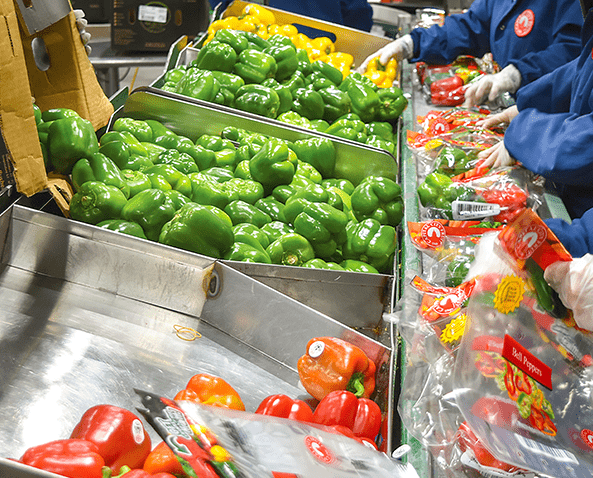
Traceability, from field to fork, has become an increasingly prominent theme in the produce industry. In an effort to halt the occurrences of foodborne illnesses linked to produce, the Food and Drug Administration (FDA) implemented the Food Safety Modernization Act (FSMA) in 2022, bringing with it additional traceability requirements.
Section 204(d) of the Food Safety Modernization Act (commonly known as FSMA 204) requires persons who manufacture, process, pack or hold foods included on the Food Traceability List (FTL) to maintain records containing Key Data Elements (KDEs) associated with Critical Tracking Events (CTEs) that are quickly providable to the FDA.
With many growers, suppliers and distributors still facing an uphill struggle to comply with the original deadline of January 2026, the deadline was extended to July 20, 2028. With the clock still ticking and compliance mandatory, what can companies do to make sure they don’t face a sizable fine when the regulation comes into force?
According to Randy Fields, chairman and CEO of ReposiTrak, too many companies have yet to develop a true understanding of traceability.
“People are paying attention to the FDA,” he said. “You shouldn’t be looking at the FDA; you should be looking at your customers.”
A widespread movement towards traceability on the part of large grocery retailer chains is accelerating the need for FSMA 204 compliance, Fields said.
On Dec. 1, 2023, The Kroger Co. notified suppliers that it intended to collect and record traceability information for all food products entering its facilities — not just those on the FTL — by June 30, 2025.
ReposiTrak, a global food traceability and regulatory compliance network, aids such ambitions by connecting food supply chain companies and wholesalers through an inventory management platform. Network members can exchange KDEs for each CTE in their supply chains.
“Retailers from Walmart to Kroger to Albertsons, about 70 in total, have made the decision that they’re going to do traceability,” Fields said. “That pushes their suppliers to do it, and it pushes the suppliers’ suppliers, and so forth. It’s less now being influenced by the FDA and more by the desire of the industry to become traceability-capable.”
Industry acceleration
On March 3, ReposiTrak announced that a leading grocery retail client had achieved true end-to-end traceability meeting FSMA 204 requirements using its Touchless Traceability solutions. The motives behind the push to bolster traceability even before the FDA-mandated deadline are simple enough, Fields said.
“The number of recalls is going up — you can call it better detection, it doesn’t matter — and every time one happens, people’s confidence in safety goes down, so consumer safety is becoming an important issue,” he said. “This does make food safer. It makes recalls faster, and all of that is really good news.”
The FTL highlights 16 to 17 product categories requiring additional traceability but contains an inherent problem, Fields said: “If you are running a distribution center — and all of these large retailers and wholesalers are — how do you segregate the products that require traceability from the rest of the products?”

Picture receiving a truckload of produce with 22 pallets, Fields said, each of which contains 40 or 50 cases. The conundrum becomes identifying which pallets and which cases require traceability.
“It’s not possible,” he said. “Distribution centers are predicated on efficiency, not anything else.”
That lesson was learned more than a century ago, he said.
“Henry Ford, when he invented the assembly line, which changed the course of history, offered a Model-T Ford, and he said, ‘You can have any color you want, as long as it’s black,’” Fields said. “You couldn’t separate them. The same is true in the distribution center.
“You cannot have special handling; it doesn’t work. So what these retailers have done in adopting traceability is move further than the FDA currently is suggesting into where the FDA says we eventually want to be, meaning we’re going to track and trace everything. It’s that simple.”
Eradicating error rates
Fields said ReposiTrak was built on the idea of supplying “financial traceability” by tracking products through the supply chain to help clients understand what their inventory is, as well as their forecasting and ordering processes.
“Because it is a new idea, people struggle to get it right,” he said.
Fields estimated that out of the around 300,000 connections that ReposiTrak has made between suppliers and retailers, around 70% do not have an IT department.
These companies are effectively not technically capable of certain sophisticated actions involved in implementing full traceability, he said.
“We’ve collected just under 2 million traceability records over the past two years,” Fields said. “Here’s what we’ve found: When you first start with suppliers to get their traceability information, the error rate on record is 40-60%. It’s so high, the records are essentially unusable. And if you can’t detect the errors in the system, you are going to propagate bad data all the way through. So the consequence of an error in traceability touches many places. It’s not easy to fix.”
Errors detected during a routine FDA check have to be factored in at every level of the supply chain from producer to retailer, Fields said. ReposiTrack’s patented error detection system aims to prevent that.
“If you don’t know the data’s wrong, you just pass it on,” Fields said, citing the ease with which errors are made, from item numbers to quantities and lot codes. “Those errors end up in everyone’s system.
“We’ve now built an expert, AI-based system that enables us to detect the errors and correct them, so the amount of work for a supplier is diminished.”
Beating the deadline
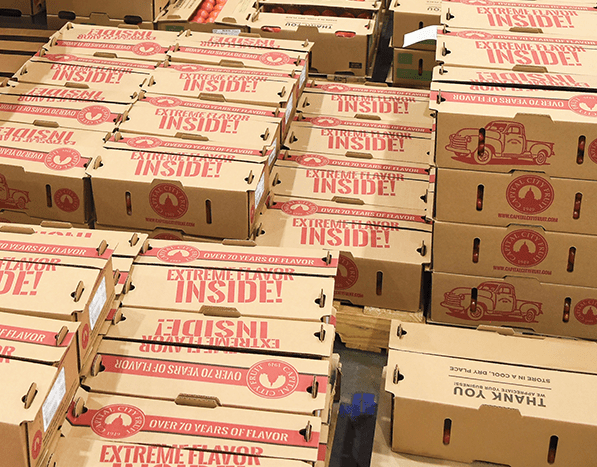
Based in Norwalk, Iowa, Capital City Fruit is a grower, shipper, repacker and supply chain manager of fresh fruits and vegetables. It distributes produce through a global network of growers across the U.S., Mexico, Canada, Europe, South America and Central America, as well as throughout the Midwest.
Chief operating officer Brendan Comito says Capital City has decided to “get out ahead” of the implementation deadline, although he admits achieving effective traceability isn’t easy.
“It’s pretty complex because you have to have three different data systems talking to each other,” he said. “You have to have the data coming from the grower-supplier, and then your own system, and then you have to get it to the customer’s system.”
Comito also said that, when the deadline does take effect, compliance will be costly. The likelihood is that much of that cost will get passed on to the consumer, he said.
“We already had traceability before this with the Produce Traceability Initiative program that the industry came up with, so we were able to trace things one step forward, one step back,” he said. “FSMA requires us to have a few more key data points that we need to track. It just adds a little bit of complexity to it.”
However, not all companies participated in the initiative, which Comito believes led the FDA to devise a standardized system.
“I think this was driven by some food safety incidents in the past where the FDA would come in and they got frustrated,” he said. “People were taking too long to trace back their items. With our system, even years ago, we were able to plug in the data and get where it came from and where it went within 10 minutes.”
As a repacker, Comito says Capital City has long had the ability to follow products by creating input lots, which record information including produce and container type, and output lots.
“All along, we have had the ability to track our product through the facility using a repack module with our enterprise resource planning (system,” he said. “Now we just have to add a few other data points to track.”