

FDA releases risk prevention guidelines for fresh-cut produce processors
The U.S. Food and Drug Administration (FDA) has released final guidance to help fresh-cut produce manufacturers and processors comply with a risk prevention rule.





The U.S. Food and Drug Administration (FDA) has released final guidance to help fresh-cut produce manufacturers and processors comply with a risk prevention rule.
The final guidance, released Aug. 11, reflects public comments received on the October 2018 draft guidance and replaces the 2008 FDA fresh-cut produce guidance. It provides recommendations and examples of how FSMA Current Good Manufacturing Practice, Hazard Analysis and Risk-Based Preventive Controls (PCHF) rule requirements can be implemented to protect fresh-cut, ready-to-eat produce from contamination with biological hazards.
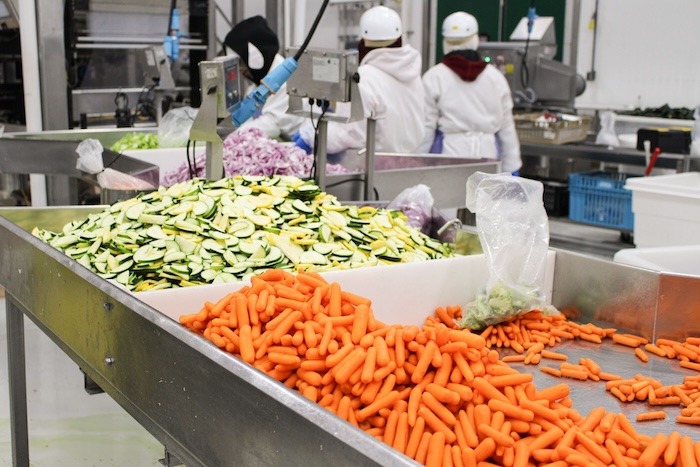
Fresh-cut produce includes any fruit or vegetable that has been physically altered from its whole state (e.g., by chopping, dicing, peeling, shredding) without additional processing (such as freezing or cooking) and distributed in fresh form, according to the FDA. Examples of fresh-cut produce include chopped lettuce, cut cantaloupe, diced onions and shredded carrots.
Fresh-cut produce can be particularly susceptible to contamination, which can be introduced in the environment where it’s grown, during transport, during manufacturing, when it’s commingled with other products or at retail, and the opportunity for contamination can be amplified through each of these steps as it makes its way to consumers. Fresh-cut produce does not receive a kill step to eliminate pathogens that may be introduced during these processes and most are sold ready-to-eat.
The final guidance document can be downloaded from the FDA website. Information about food safety best practices is also available online.
Produce safety has made recent headlines during a cyclospora outbreak and a recall prompted by salmonella fears.