





Demand grows for modified atmosphere packaging solutions
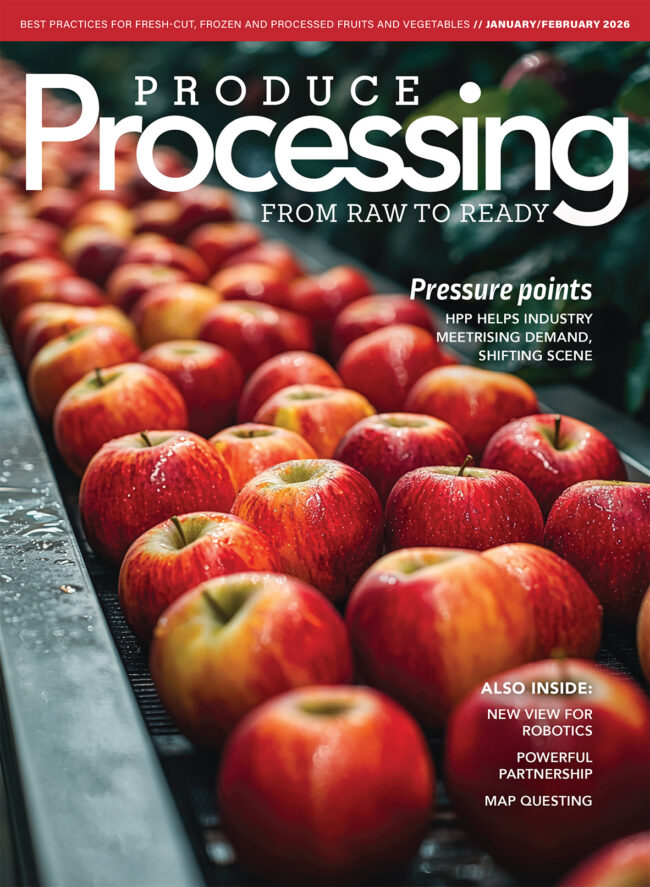
Modified atmosphere packaging (MAP) is gaining prominence in produce. From strawberries and blueberries to sliced, ready-to-eat pineapple and melon, the packaging format offers both sustainability and freshness advantages compared with traditional options such as clamshells.
Though Europe has led MAP adoption in recent decades while the plastic-heavy clamshell has continued to reign supreme in the U.S. and Canada, industry watchers believe North America is catching up.
MAP manipulates the atmosphere inside packaging, reducing the amount of oxygen and replacing it with other gases, to prolong shelf life. The controlled atmosphere inside the package is stabilized through gas flushing, compensated vacuuming, or the use of breathable shrink wraps or packaging films.
Though MAP’s use of polymer film reduces plastic use, the method can be expensive, requiring specialized machinery, specific barrier films and trays and extensive quality control for gas flushing and sealing.
MAP BENEFITS
Consulting firm Towards Packaging projects the MAP trays market to grow from $940 million in 2025 to more than $1.5 billion by 2034 — a compound annual growth rate of 5.63%.
North America is projected to exhibit the fastest growth due to increasing adoption of eco-friendly packaging solutions.
Paul Tye, director of innovation and business development for tray and cup solutions at Bardon, UK-based Graphic Packaging International, said MAP solutions are increasingly being recognized as the best option for keeping products fresh, especially fresh-cut and ready-to-eat produce.
“Modified atmosphere packaging slows spoilage, extends shelf life and preserves food quality, and is the only real choice for fresh produce applications such as prepared fruit and salads that are sold refrigerated,” he said.
Gary Ward, chief technical officer at Israel-headquartered StePacPPC, said MAP products help reduce global food waste. According to the United Nations Framework Convention on Climate Change, food loss and waste account for 8% to 10% of annual global greenhouse gas emissions — nearly five times the total emissions from the aviation sector.
“We address major challenges facing the fresh produce industry: supply chain waste reduction, cost reduction, market expansion, and enhanced product quality for consumers,” Ward said. “Our broad range of MAP solutions preserves fresh produce quality, reduces supply chain waste and lowers global greenhouse gas emissions.”
OVERCOMING OBSTACLES
While MAP tray solutions can help reduce reliance on plastic, the process does present challenges.
“Plastic trays have traditionally been the solution for applications requiring a modified atmosphere, providing reliable hermetic sealing, good shelf-life, strong pack integrity and efficient supply chain performance,” Tye said. “Recent paperboard innovations have created a new generation of trays that offer equivalent operational efficiency and performance to plastic, are recyclable
in household waste streams, are recycled at high rates (86.6% versus just 25% for PET trays in Europe), and use 80% to 90% less plastic than traditional trays.”
But Tye said that while pressed paperboard trays offer a cost-effective and high-performance alternative to plastic trays for applications like frozen ready meals, they are not suitable for applications requiring MAP because the nature of the tray edge makes achieving a hermetic seal more difficult.
Given this difficulty, he said it is easy to understand why plastic has been the dominant material for high-volume, lower-cost, modified atmosphere fresh produce packaging.
That challenge led Graphic Packaging to develop its PaperSeal Pressed pack, which uses a barrier liner to combine the cost-effectiveness of a pressed tray with hermetic seal performance.
Tye said PaperSeal products are being adopted across Europe and North America for everything from chilled premium and organic protein lines and ready meals to prepared salads, fresh olives and ready-to-eat pasta.
“PaperSeal has a unique construction, with a continuous sealing flange that delivers an excellent hermetic seal,” Tye said. “Once the top film is removed, the tray is recyclable in curbside recycling schemes with or without the barrier liner removed, depending on local recycling guidelines. In the UK, for example, it can be recycled with the barrier liner in place, as there is less than 10% plastic per pack, enhancing convenience for consumers and supporting recycling compliance.”
FINDING THE BEST FILM
Ward said StePacPPC’s packaging solutions slow respiration, delay aging processes and inhibit microbial decay of packed produce. These attributes help preserve quality and nutritional value, supporting prolonged storage and long-haul shipment while reducing supply chain waste and improving the consumer experience.
StePacPPC, which developed advanced polymer films with a range of water vapor transmission rates (WVTR) to manage moisture in packaging, currently has more than 17 different film structures in its portfolio with varying WVTR values, making them suitable for different applications.
After selecting the most suitable film for the application, Ward said the company regulates the permeability of the film to oxygen and carbon dioxide to achieve the desired modified atmosphere for the produce being packed.
StePacPPC’s portfolio includes Xflow films for the automated packing of bulk produce, as well as its line of Xgo retail packaging solutions that covers lidding film, roll-stock for flowpack applications, standing pouches and preformed bags.
In 2025, the company introduced the patent-pending PAZ Stand-Up Pouch, which Ward described as “the first resealable stand-up pouch that effectively releases excess moisture.”
“This solution is not only engineered to provide a modified atmosphere but also control and release excess moisture, making it ideal for moisture-sensitive produce such as cucumbers, green beans and certain exotics,” he said. “The convenient ‘grab and go’ stand-up pouch is gaining momentum in North America and represents a breakthrough in shelf-life extension and waste reduction of moisture-sensitive items.”
FACTORS DRIVING DEMAND
Ward said demand for MAP solutions in North America is growing at a time when European legislation governing plastic packaging — and MAP films — is beginning to change.
“Europe is a mature and well-established market for MAP in fresh and minimally processed produce,” he said. “However, upcoming reforms to plastic regulations, including recyclability mandates and restrictions on certain plastic formats, are likely to bring changes to the structure of MAP films used and maybe also the scale of its use.”
PPWR (Packaging and Packaging Waste Regulation) in the EU aims to minimize waste, encourage reuse and increase recycled content through lifecycle rules, strict recyclability standards, bans on unnecessary packaging, mandatory recycled content for plastics, and phase-outs of harmful substances like PFAs (per- and polyfluoroalkyl substances), a group of thousands of man-made chemicals known as “forever chemicals.”
“In contrast, North America’s MAP market is expanding rapidly and closing the gap with Europe as producers invest in automation and high-performance packaging to extend shelf life and reduce waste,” Ward said.
Ward said StePacPPC research has found that demand for MAP solutions is likely to continue growing at a rate that exceeds produce market growth.
He said that demand is being driven by several factors: stronger consumer demand for fresh, convenient and minimally processed produce; the rapid expansion of e-commerce; more complex cold-chain supply routes that make extended shelf life valuable; and an increased focus on reducing food waste.
Tye said the increasing adoption of MAP in North America is a consequence of consumers demanding not just longer-lasting fresh foods and more convenient packaging options but also packaging containing less plastic.
“Study after study demonstrates that consumers prefer paperboard packaging,” he said. “While the regulatory landscape in the U.S. is not a key driver of ‘paperization’ as it is in Europe, thanks to legislation such as the Packaging and Packaging Waste Regulation, it’s likely that U.S. demand for paperboard options for MAP applications will only grow — but cost effectiveness will continue to be a strong prerequisite to adoption.”