

Cold plasma moves toward the processing line
A recently published research paper highlights how cold plasma performs on fresh‑cut fruit. Learn more details.





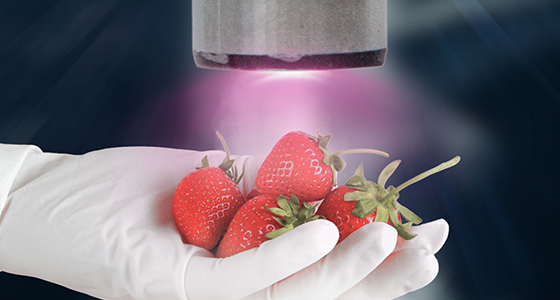
Although the technology is still in the experimental stage, the study, “The Effects of Cold‑Plasma Technology on the Quality Properties of Fresh‑Cut Produce,” points to potential benefits for processors, including lower spoilage, cleaner labels and easier sanitation.
THE TECHNOLOGY BEHIND COLD PLASMA
Cold plasma is an ionized gas made up of highly reactive components, including ions, electrons and reactive molecules such as oxygen or nitrogen species. Generated at room temperature and applied in short bursts, it is suitable for produce that cannot tolerate heat or long processing steps.Devices vary, but most use specialized equipment to create and direct these reactive components toward the surface of the fruit or packaging. Once there, the particles interact with microbes, breaking down cell walls and inactivating pathogens. They can also help degrade pesticide residues or toxins on the surface.
For processors, the appeal is straightforward: cold plasma can reduce microbial loads without water, chemicals or heat. While it doesn’t penetrate deeply, it provides an effective surface-level treatment for fresh-cut fruit, whole fruit and packaging.
SAFETY AND QUALITY BENEFITS
Cold plasma can help processors maintain both the safety and quality of fresh-cut fruit. The studies outlined in the paper show application can reduce pathogens and spoilage organisms on strawberries, apples, pears and mangoes, with treatment times ranging from seconds to a few minutes.For fresh-cut lines — where larger surface areas increase contamination risk — cold plasma can provide an extra layer of protection against microbes such as salmonella and E. coli.
At the same time, the technology can preserve appearance, texture and nutrients. Short treatments slow browning by reducing enzymes like peroxidase and polyphenol oxidase.
For example, treated kiwifruit retained color, firmness and antioxidant levels, while a 30-minute treatment lowered browning enzymes in Pink Lady and Red Fuji apples. Most fruits also show minimal changes in vitamin C, with kiwifruit retaining all of its vitamin and carrots, cucumbers and pears losing only 3% to 4%.
By combining microbial control with maintenance of texture, color and nutrients, cold plasma offers processors a versatile, nonthermal option for keeping fresh-cut fruit both safe and visually appealing.
COMPARISON TO OTHER TECHNOLOGIES
Cold plasma is one of several nonthermal options being explored for fresh-cut programs. Compared with high-pressure processing, pulsed electric fields or ozone, it stands out for short treatment times and low resource use. It doesn’t require added water or chemicals, and it avoids exposing fruit to heat or pressure, helping preserve texture and flavor.However, its penetration is shallow, and results can vary depending on fruit type and ripeness. Cold plasma works best on smooth surfaces, but according to the research, it can also reach crevices and cracks that are difficult for standard sanitizers to access, though it still may not penetrate deeply into dense fruit tissues.
BARRIERS TO SCALE
Cold plasma isn’t ready for widespread commercial deployment. Equipment needs fine-tuning to ensure even exposure, and performance can vary with fruit type and ripeness. Excessive treatment can cause softening or nutrient loss, so processors will need clear operating guidelines before investing.Other considerations include airflow management, since plasma can produce ozone, and chamber design. Off-the-shelf systems for high-volume operations are limited, though ongoing development aims to address these challenges.
POTENTIAL COLD PLASMA USES
If cold plasma becomes more accessible, early adopters are likely to include processors handling:- High-value, color-sensitive items such as cut apples, kiwi, mango and strawberries
- Short shelf-life blends that regularly face shrink or quality complaints
- Products with residue-related sales requirements, including organic fruits
- Packaging sanitation needs, since plasma can treat films and containers
WHAT TO WATCH NEXT
Future research will focus on system design, process validation and understanding how cold plasma affects nutrients and sensory quality over time. Standardized reporting and larger-scale studies — especially for fresh-cut fruit — are still needed.As engineering catches up to the technology, processors could gain another nonthermal tool that requires few inputs and fits alongside existing wash steps and quality controls, offering an additional way to maintain product quality in an increasingly demanding marketplace.