

California initiatives create pivotal moment for packaging
Recently, California has made waves with the passage of two major pieces of state legislation regulating produce packaging, causing nationwide ripples.






The saying “As California goes, so goes the nation” emphasizes the role the West Coast’s largest state plays in shaping trends that influence the rest of the country. The Golden State holds national sway in everything from politics and social trends to music, technology, movies and fashion.
Recently, California has also made waves in the produce packaging sector with the passage of two major pieces of state legislation regulating produce packaging. The state’s strengthened sustainability standards are poised to cause ripples into the way produce is packaged nationwide.
Legislative action and pushback
SB 54, the Plastic Pollution Prevention and Packaging Producer Responsibility Act, went into effect on May 1. The bill, focused on reducing plastic pollution, requires producers to reduce single-use plastic packaging and foodware by 25% by 2032 and mandates that all single-use packaging and plastic foodservice ware sold in California be recyclable or compostable by 2032.
Meanwhile, SB 343, also known as the “Truth in Labeling Law,” goes into effect in October. This law regulates the recycling standards of packaging in California, requiring that the materials meet a “60/60 threshold” — accepted by local recycling programs that serve 60% or more of the state’s population and able to be sorted into defined streams by large recycling processors that serve at least 60% of the state’s recycling programs.
The legislation affects companies that operate in California and ship their products nationwide as well as companies that ship products into the state. In a sector already navigating supply chain challenges and economic challenges including tariffs, the new standards have caused industry concern.
A lawsuit filed in late June by a coalition of 17 state attorneys general, led by Nebraska, and the National Association of Wholesaler-Distributors, calls for enforcement of SB 54 to be blocked. The action claims the legislation represents government overreach, unfairly imposes California packaging and cost mandates on out-of-state businesses, violates interstate commerce laws and delegates enforcement power to an unelected private entity: the Circular Action Alliance, established to help produce companies register, report data and pay fees to fund the recycling and recovery of their packaging.
On the flipside, another lawsuit from environmental action groups claims that SB 54 doesn’t do enough to reduce waste. A June lawsuit filed by the National Resources Defense Council, Californians Against Waste Foundation and Oceana charges that the final implemented measures are weakened, arbitrary and create loopholes that undermine the law’s recycling and plastic reduction goals.
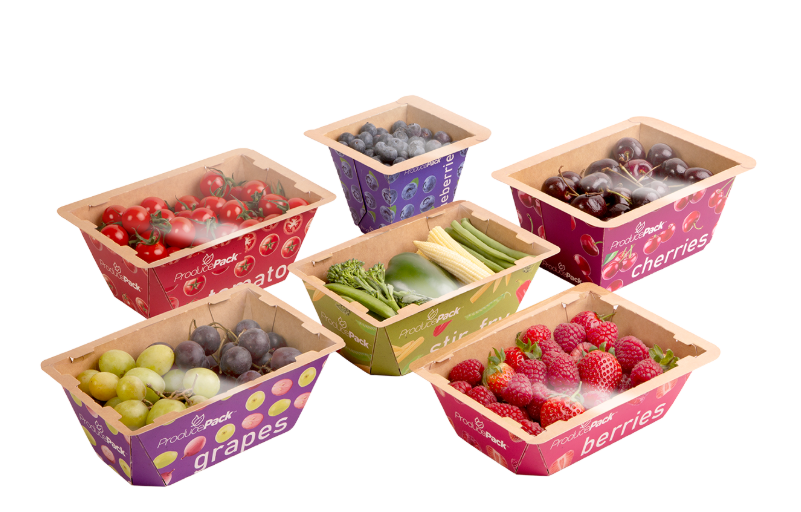
Paper produce trays with reduced plastic film from Graphic Packaging are an example of how packaging companies are adapting to new initiatives aimed at increasing sustainability and reducing pollution.
Everyday effects
While these lawsuits make their way through the courts, produce packagers are still having to navigate the changes brought on by the law.
Chris Kampsen, an enterprise account executive with Atlanta-based Veritiv, has been front-and-center with customers since the legislation was announced, helping them come up with strategies to deal with the new laws and still get their products where they need to go.
Veritiv provides specialty packaging and supply chain solutions and partners with agricultural growers, packers and retailers to supply custom, industrial-grade packaging for products ranging from clamshells for berries, tomatoes and herbs to corrugated trays for bulk and retail display.
Since SB 54’s initial measures were first enacted in 2022, Veritiv has worked with customers to come up with solutions that will both meet new regulations and help keep costs down, Kampsen said.
“When the legislation was announced, we had a lot of accounts reaching out for help navigating the legislation,” he said. “We are seeing questions around three main areas: implementation timelines and enforcement; how to balance the regulatory requirements and the challenges of produce packaging; and, of course, cost. We have a team focused on sustainable packaging who understands the ins and outs from design to compliance to production. This helps us when we work with our customers to share ideas and create customized solutions that work best for them.”
Kampsen said three factors are helping Veritiv clients to rework their packaging not only to comply with California law but improve future sustainability:
• Material downgauging. Bigger is not always better when it comes to packaging, especially in this era. Some brands are looking into material downgauging, which consists of reducing the thickness, weight or size of material — most often plastic films and packaging — while still maintaining its required strength and performance.
Veritiv’s material downgauging strategy for producers includes advanced film technology, which transitions traditional plastic wrapping to high-performance, multilayer LLPPE (linear, low-density polyethylene) and stretch films that provide both better puncture resistance with a thinner gauge.
The company also helps companies with right-sizing and auditing, evaluating exactly how much material and what thickness is required to protect products in transit and keep them fresh.
• Smart design engineering. Both creativity and simplicity play a big part in making changes, and Kampsen said companies can often make their packaging California-compliant by figuring out new looks and better ways to engineer packaging that’s already familiar.
“Smart design engineering is a gamechanger,” he said. “Something as seemingly simple as adding ridges to clamshells dramatically improves structural integrity, which allows us to further downgauge the amount of PET needed. Retailers love this because the package still performs perfectly on the shelf, and producers love it because they’re using less material.”
• Shifting materials. Since California’s new rules were announced, many produce packaging companies nationwide have been shifting their packaging to paper alternatives, including certified compostable paper, molded fiberboard and paperboard certified by the Forest Stewardship Council.
“We’re helping some of our accounts explore strategic shifts from plastic trays to paper-based alternatives, particularly for applications where moisture barriers aren’t critical,” Kampsen said. “This isn’t one-size-fits-all, but where it makes sense functionally, it can be a great compliance and marketing tool.”
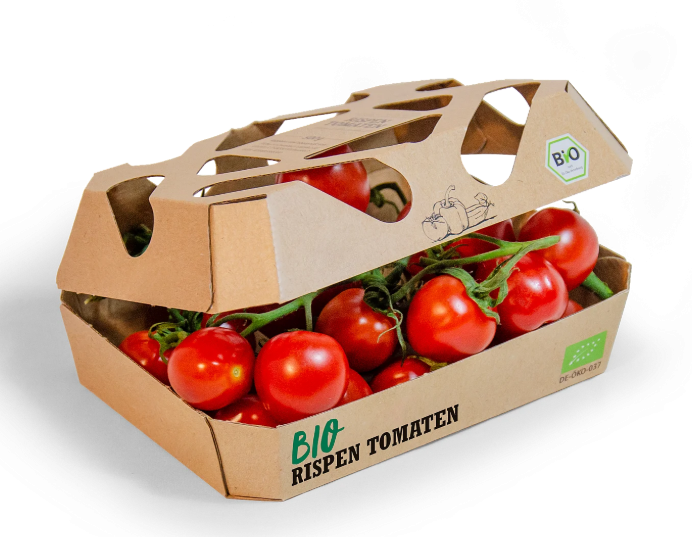
Recyclable paper clamshell packaging from Mondi Flexible Packaging.
Forward-looking innovation
No matter what happens with the pending lawsuits, Kampsen said the key is for produce packagers not to make rash decisions in order to comply with the “California factor,” but rather to take a long-term approach that will be cost-effective while also maintaining long term safety and sustainability goals.
“We understand the nuances of produce and are working closely with our customers to provide smart solutions that reduce material usage, improve recyclability and create cost efficiencies while maintaining the integrity of the package,” he said. “It’s not about wholesale change; rather, it’s about strategic optimization.”