

AI packaging potential: Tech can boost accuracy, efficiency





That’s because AI, a large umbrella of technologies including machine learning, machine vision, deep learning and natural language processing, can deliver a higher level of accuracy and efficiency, according to “Working Smarter: How Manufacturers Are Using Artificial Intelligence,” a report published in May 2024 by the National Association of Manufacturers.

Jorge Izquierdo
Machine learning algorithms can analyze vast amounts of historical and real-time data to detect subtle patterns that human operators might miss, identify areas of improvement and make predictions, according to “The Future of Automation in Packaging and Processing” report from PMMI, The Association for Packaging and Processing Technologies. By continuously learning from data, AI-powered systems become increasingly accurate over time, thereby enabling manufacturers to make better, data-driven decisions.
The convergence of AI with other technologies such as predictive maintenance, data analytics, sensors and the Internet of Things enables the automation of complex tasks, streamlines processes, optimizes performance, enhances quality, minimizes downtime, improves overall equipment effectiveness and cuts costs. AI also can support the transition to a more sustainable operation by optimizing production processes, reducing waste and improving resource management.
Thus, interest in deploying AI is high. Most manufacturers are using or planning to use AI, according to a 2024 PMMI report, “Transforming Packaging and Processing Operations.” One reason for the interest is that AI can reveal unknown unknowns, or information you don’t know that you don’t know.
According to the report, this aspect of AI could lead to breakthroughs in operational efficiency, product quality and process optimization by uncovering hidden patterns and variables that humans don’t see. In one example, AI identified an unexpected variable that was causing registration problems on printed beverage cartons. Controlling the variable eliminated $18 million a year in scrap.
Applications for AI include quality control and inspection, robotics, predictive maintenance, yield and supply chain optimization, product personalization/customization, employee training, and production planning/scheduling.

APPLICATION BREAKDOWN
- Quality control and inspection: AI-powered vision systems can inspect packaging materials quickly and accurately, ensuring quality standards are met. These systems can detect defects, such as scratches, dents or printing errors in real time, significantly reducing the risk of faulty products reaching the market.
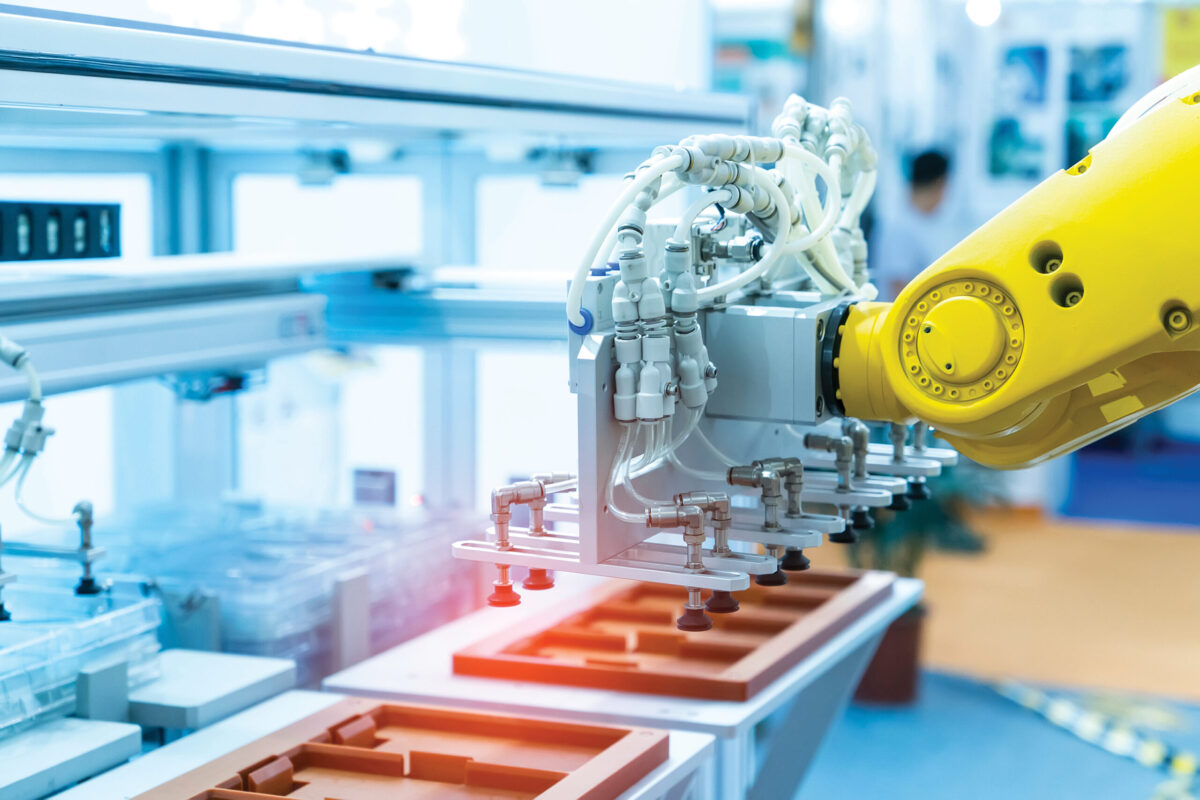
- Robotics: AI-driven robots are transforming packaging operations, increasing speed and precision. These robots can handle repetitive tasks like picking, placing and packaging items, freeing human workers for more value-added activities. Advanced AI algorithms streamline programming and enable robots to adapt to changing conditions, making them highly versatile in various packaging scenarios.
- Predictive maintenance: The use of AI is leading to the development of predictive maintenance systems that can identify potential problems before they occur, reducing the risk of equipment failure and unscheduled downtime. In the short term, both original equipment manufacturers (OEMs) and consumer packaged goods (CPG) manufacturers believe predictive maintenance will be where AI has its greatest impact, according to the “Transforming Packaging and Processing Operations” report.
Product personalization and customization: AI allows packaging manufacturers to cater to individual consumer preferences. By analyzing consumer data and preferences, AI algorithms can generate customized packaging designs and produce them efficiently. This personalization fosters consumer engagement and brand loyalty, and ultimately increases sales.
Employee training: Instead of using operator experience, technical manuals and company procedures to create training programs, AI can assimilate volumes of technical and company policies into one database and create standardized and customized training in minutes.
“Once verified by experienced operators and the technical team, training can be rolled out in hours,” said Scott Spencer, FSO manufacturing coach for the FSO Institute. “A simple prompt such as, ‘Write a standard operating procedure (SOP) and training on the startup of a piece of equipment’ will produce a detailed SOP and an outline of the SOP training document. After adding a few pictures for clarity and verifying accuracy, the company now has a detailed SOP and training on the equipment startup process.”
• Production planning and scheduling: Optimizing labor allocation and machine utilization is a massive data challenge that has relied on historical trends and equipment knowledge plus estimates about product demand.
“In contrast, AI applications can analyze real-time manufacturing data, sales trends, supplier statuses, equipment efficiency and more to create optimized staffing and run schedules down to 15-minute intervals,” Spencer said. “AI considers countless variables and possibilities that human planners can’t feasibly process.
“By mapping out an idealized plan for staffing levels, material flow, equipment usage and inventory needs, AI eliminates production bottlenecks, minimizes downtime and synchronizes the full manufacturing process.”
CHALLENGES TO DEPLOYMENT
Reaping the benefits of AI is not without challenges. One of the primary obstacles is the collection and analysis of data generated by sensors and machines. This requires robust data infrastructure and analytics capabilities to ensure accurate predictions and preventive actions.Implementing AI also requires skilled personnel who can effectively manage and interpret the data. Upskilling the existing workforce and attracting new talent with expertise in AI and data analytics will be critical for organizations to fully harness its potential.
As PMMI’s Future of Automation report highlights, organizations that embrace AI stand to gain a competitive edge in an increasingly dynamic marketplace. With proper investment in infrastructure and talent development, as well as collaboration with technology providers, CPG companies and OEMs can embark on a transformative path toward a more efficient and sustainable future.
There is no better place to gain insight into the latest innovations in AI, digitalization and automation than at the upcoming PACK EXPO Southeast (March 10-12, 2025; Georgia World Congress Center, Atlanta). Produced by PMMI, The Association for Packaging and Processing Technologies, PACK EXPO Southeast is the latest addition to the PACK EXPO portfolio of shows.
For more information or to register, visit packexposoutheast.com.
Jorge Izquierdo is PMMI’s vice president of market development.